
Leaderboard
-
1969 SPRINTER
Regular Member2Points73Posts -
Banjo
Regular Member1Points2047Posts -
altezzaclub
Regular Member1Points6844Posts


Popular Content
Showing content with the highest reputation on 06/03/17 in all areas
-
1 pointAltezzaclub is quite correct in saying that your result is normal, with a static advance setting of 8 deg, but when you plug the vacuum hose back on, it rises to 20 deg dynamic advance. At 900 rpm idle the bob weights should be tucked up against their stops, held there by the springs, and having absolutely no effect at all. The 20 deg of "dynamic" advance you are seeing with the timing light is the sum of the static advance plus the 12 deg advance contributed by the vacuum actuator. You are never going to detonate at 20 deg advance when there is no load at idle, when the mixture is very lean. Don't forget that a lean mixture requires a lot more advanced spark, as it is harder to ignite, than a rich, dense combustion mixture. The vacuum advance existing in your inlet manifold has little or no relationship to the revs of the motor. It is purely a simple way of practically feeding back to the ignition system, what the load is on the engine is. You would not be surprised to know that when you have got your car into top gear, driving on a flat road at say 60-80 klms per hour, with no passengers, & no load of cement bags in the boot, you are probably only using/need about 30 -40% of the power your engine is capable of. Your foot is not flat to the floor, and the mixture is reasonably lean, and you need all the advance you can get to make the engine run as efficiently under those conditions. In years gone by it was popular to fit aftermarket vacuum gauges to your dash. (I had one) I think there were a couple of car brands that fitted a gauge in the dash, which they called an economiser. It didin't have units on it. It had a green & red zones at each end, and a zone in the middle called the economiser zone, where you tried to keep the needle whilst you drove. It stopped you from stamping on the accelerator, which usually shot the gauge to the end. The most important thing, about ignition advance is to ensure that the components in the engine that create advance & retard are working as intended. Remember our Rollas are around 40 years "olde" & getting tired. Things do wear out & break, and forgotten about, like those little bob weights that hide in the bowels of the distributor & rarely see the light of day, let alone get oiled. I've pulled some distributors out of Rollas, & after removing the contact plate been faced with weights rusted and pivots worn so badly they didn't have a hope in hell of ever performing as they were intended. When I've cleaned them up, oiled them & put it all back together, the owners have indicated it was like a whole new car. Vacuum advance units do fail, but are very easy to test. ( A piece of plastic tube & your mouth ) Hope that helps.

 1 point
 -
1 pointYou shouldn't get detonation, the motor is doing no work at idle. Then when you open the throttle to get it to do some work the vacuum collapses and the ignition retards. You will hear any detonation or pinking anyway, its not like running a turbo, and it will be at wide-open throttle with the cylinders as full as possible and the ignition running purely on the centrifugal weights. More modern carbs run with ported vac, a port that goes into the airflow right at the throttle plate closing spot, so it gets cut off or very reduced at idle. It still retards as you open the throttle, but doesn't carry so much vac advance at idle. It is more active at high airflow speeds. You can run both ports at once on a duel diaphram distributor. What fuel do you use?? I just United's 95 all the time, modified 4K, 4AGE with cams and the 3SGE in the Altezza all run on it. You can run it w/o the vac at all, its just an anti-pollution thing. All our Corollas probably take up 20 modern cars with thier clean exhausts, so an extra bit of nitrogen oxides won't matter!1 point
-
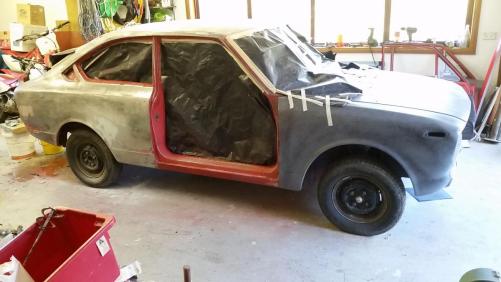
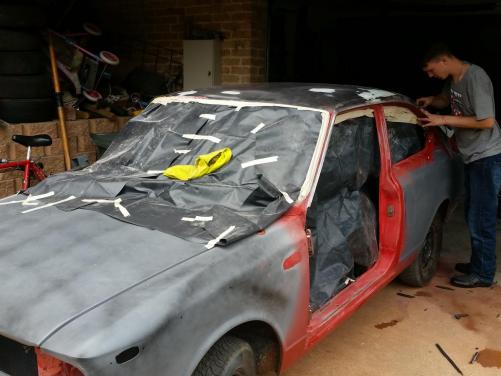
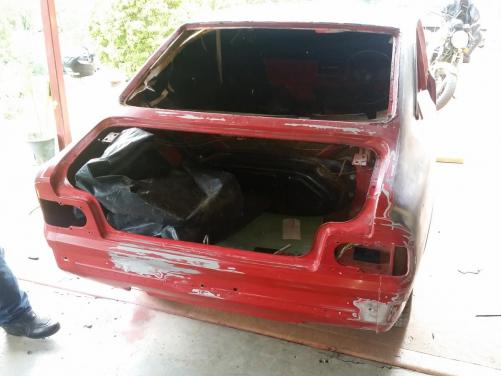
1 pointHello all, about due for an update i reckon!! We got the car back from Havnadip with the rust repaired and body ready to go! Had the boys there really help us out and to them we owe thanks! With the car being beautiful and straight, we were ready for paint! So over the weeks trailing the car's return, we slowly readied her for the first glimpse of that beautiful Helios red. Lots and lots of prepwork. Masking, sanding, etc etc.. lots of time and effort. Both of which are a bit hard to find considering I'm now in Grade 11 as a student!! (Money, too!) One way or another, with the helpof spectrum paints, the boys from Havnadip, our mates from KTM hobart and a handful of others, she now has a glimpse of what is to be! The insides of the doors, boot and bonnet are now red! Next on the plate is putting them back on, then preparing the whole body for the final spray!!! Very exciting progress! and massive props to my dad, who has done a fantastic job spraying the sprinter. Especially considering how long it has been since he last did it!
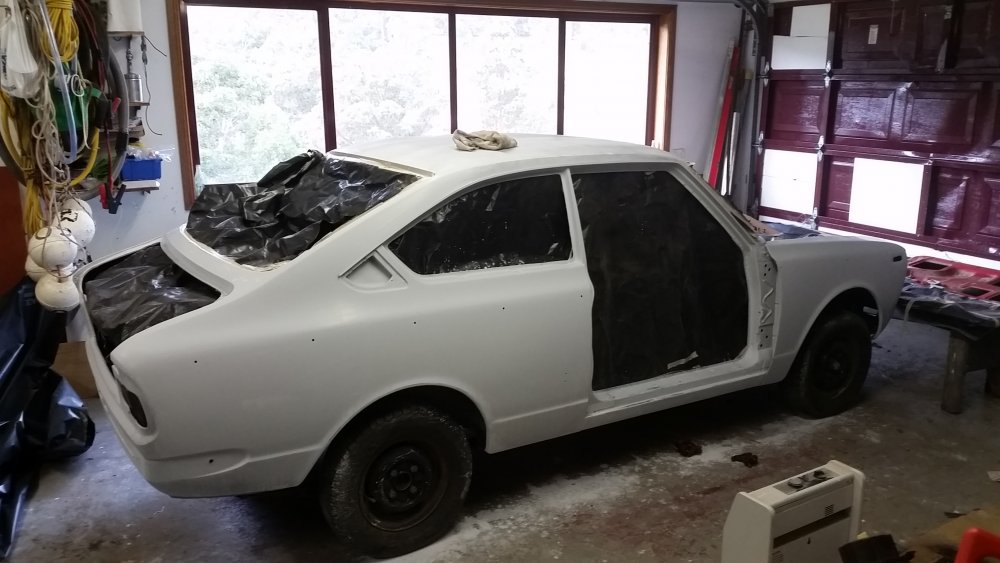


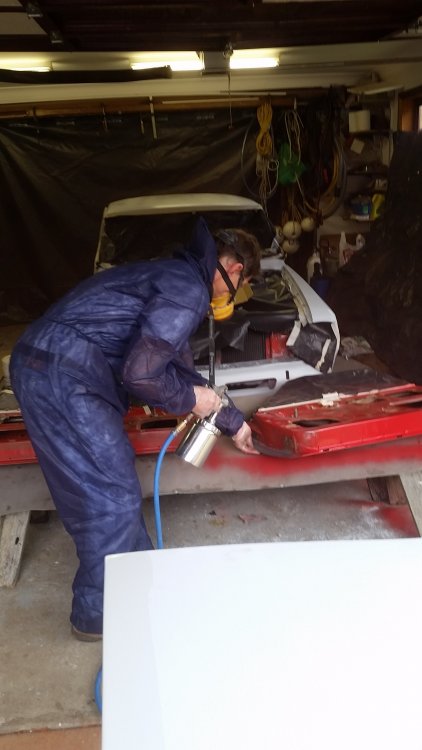

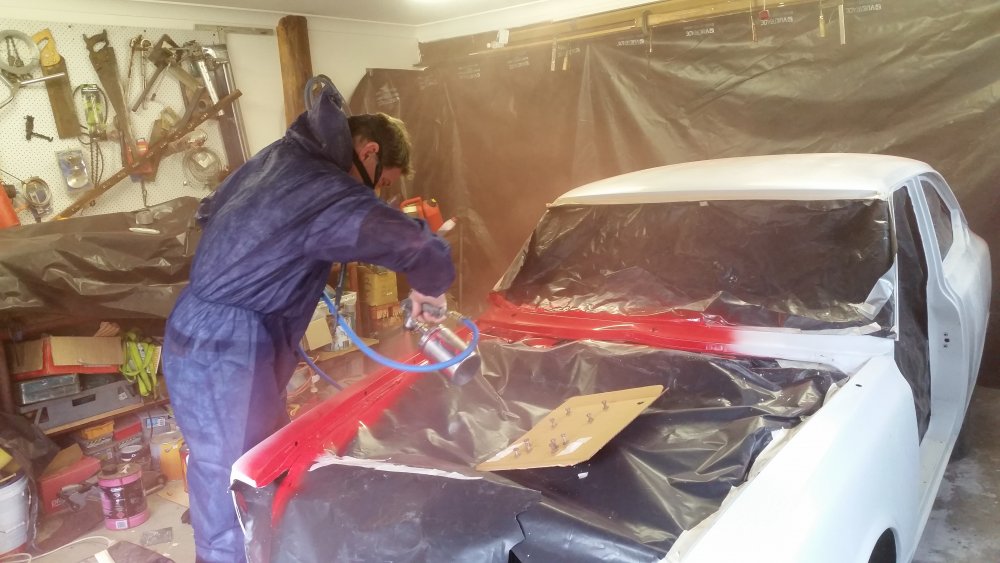
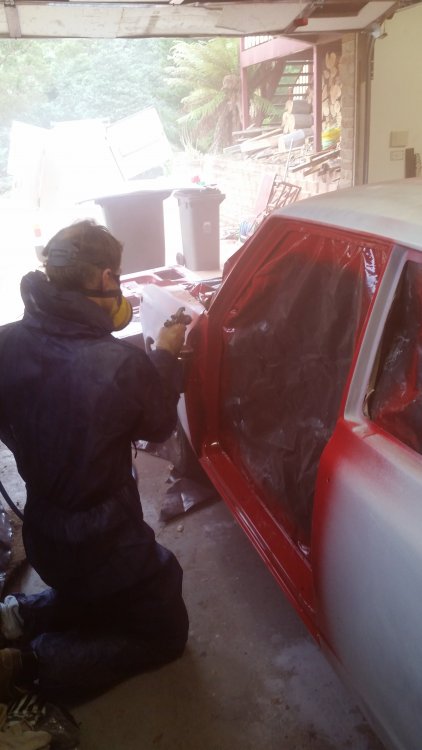 1 point
 -
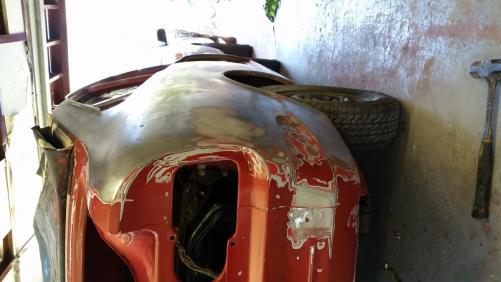
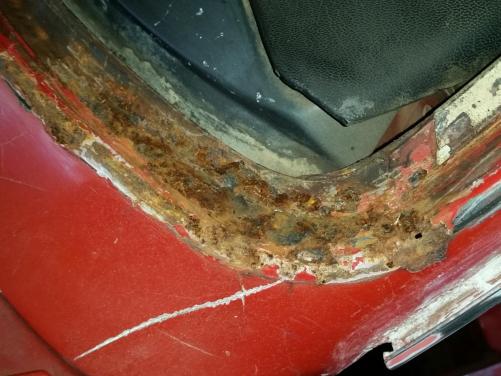
1 pointRightio, bit of an update to do. The sprinter isn't seeing as much work as I'd like it to be, but regardless, at least it has seen SOME. I was happy to score my new speakers and head unit for Christmas. Not much better than getting car stuff for chrissy ;) Supercheap also credited me the difference when they went on sale, so I was lucky enough to score myself a few basic tools :) Had a good day working on it with my dad; Looking pretty good from here. Much of the bodywork is done, with only a few bits and pieces remaining. A few days later I got a mate of mine into working on it with me, after we'dgone for a motorbike ride. He helped me remove the windscreens... and; We did know that there was a little bit of rust on the front left corner of the windshield, but we didn't know to what extent. Unfortunately, even after our cleaning up, this is a shop job. We can't do it :/ So! Money! Yeah! We've rang the same bloke that helped with my doors, and in a few weeks we'll be able to take the car in to have the rust repaired. Slow progress, but progress nonetheless. I looks like from this point I will be borrowing funds off my dad and work my arse off to pay it back ao we can just get the car done. I think we're both keen to get that thing out of the garage.


 1 point


