

Everything posted by Banjo
-
-
-
It could well be the flasher unit, which looks like a relay, & usually resides down behind removable the kick plate, adjacent to the drivers right foot. (that is if you reside in Australia) However, as the light bulbs's load actually determines the flasher rate, there could be a number of other things, that could stop it flashing. I suggest removing all six (6) bulbs & testing them individually, to make sure they all work properly. Clean their bayonets up, & the socket, before refitting the bulbs. Make sure that all bulbs are the correct size & Watts rating. Also look under the steering column, & make sure none of the electrical plugs or sockets, have come loose. Don't replace the bulbs with LED ones ! If all that looks & tests OK, then you will need a test lamp & a wiring diagram to work through, to work out where the issue is. Check earthing of the flasher unit. P.S. If you are pretty sure it might be the flasher unit, the best way would be to "borrow" one from a known working Rolla, & substitute it for yours. Cheers Banjo
-
-
Hi Keith, "Now add an auto gearbox torque converter hooked up with water piped through a valve and calibrated for bhp as it pumps the water round and round!" My ultimate goal is to build something I can place on the rear end of the test bed, so that I can suitably load on the engine, to set parameters & settings under load. At present it is all done on the road, on steep hills. I've laid awake at night & dreamed of all sorts of things, that could economically & simply built & implemented. I've though of a generator with a dummy resistive load. A large water pump circulating water, that could be throttled, except the pump would probably just cavitate. I've never considered the torque converter idea. Not sure whether it would provide enough load. You might like to expand your thoughts on this, as I really want to ultimately build some sort of engine dyno load thingy. Any suggestions welcome ! Cheers Banjo
-
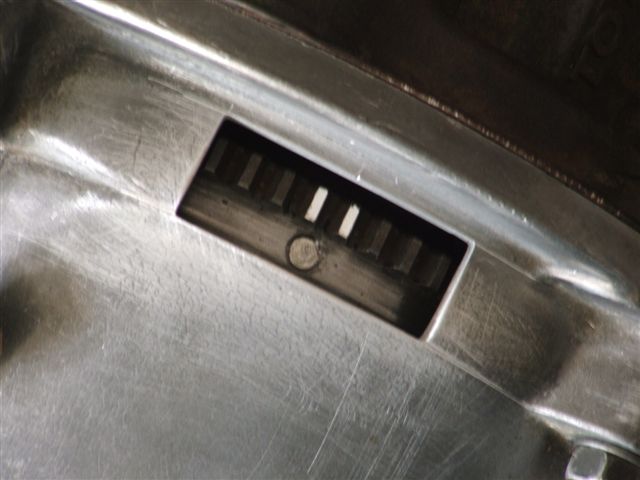
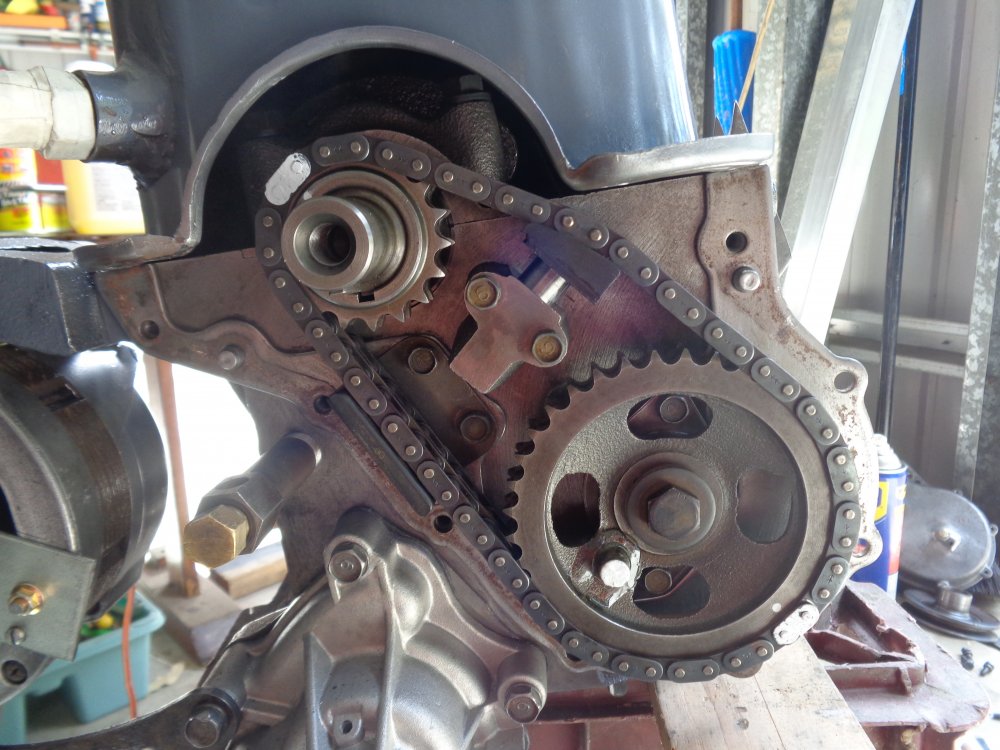
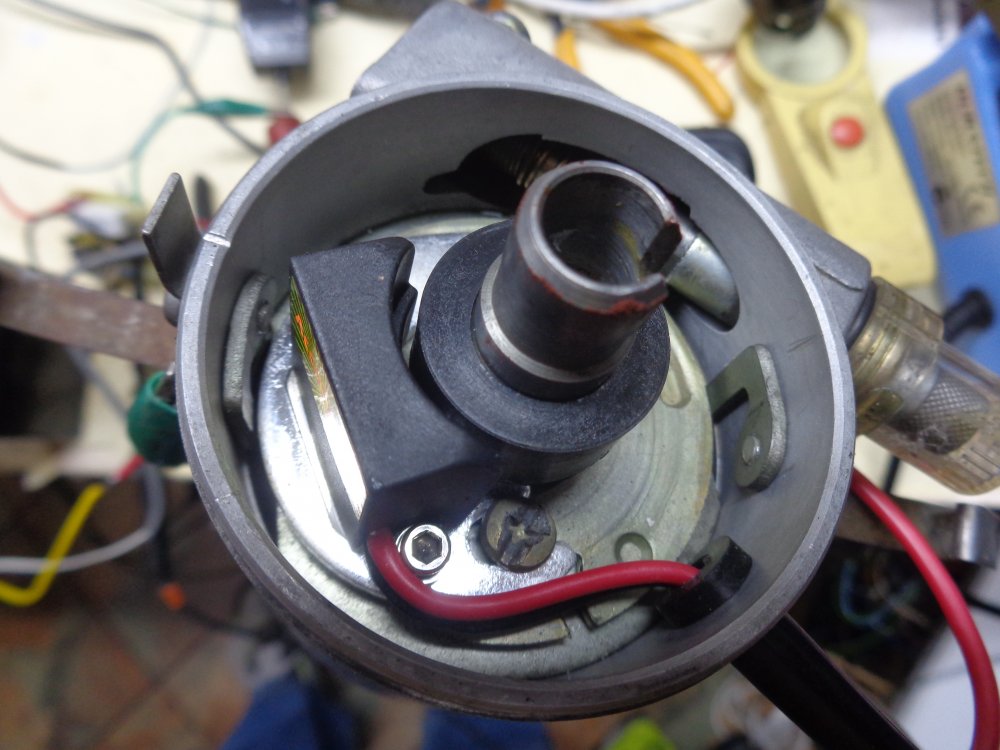
Hi Bruce, "What's the piece cut out of the bellhousing for? Can see the ring gear." The gearbox in the photo is gutted & completely empty. It's just there for mounting purposes. The little rectangular hole in the bell housing, is from an earlier experiment where I was using a Hall Effect detector to trigger off two (2) rare earth magnets, mounted in holes in the flywheel, 180 deg apart exactly, for a waste spark arrangement, which worked well. I even was using it for detecting the teeth on the flywheel at one stage, so the ECU could always know exactly where the crankshaft was. I've experimented with all kinds of triggering over the years, as I have found that K series engines, in standard format, have a lot more to give, if they are timed & tuned properly, with a more accurate & aggressive advance curve. The Japanese, were very conservative with their designs 40+ years ago, and didn't need or want lots of initial warranty claims, so basically over designed the engines, & detuned them. This is borne out by the fact that "worked" K series engines can produce at least 3 x their original HP, with the same bottom end. This is why K series engines are so reliable. Anyway, after all this experimenting, I'm now ready to do a full distributorless sequential firing ignition system with COPs, off an 1NZFE Toyota engine, and a full sequential EFI injection, based around the 7K inlet manifold. Cheers Banjo
-
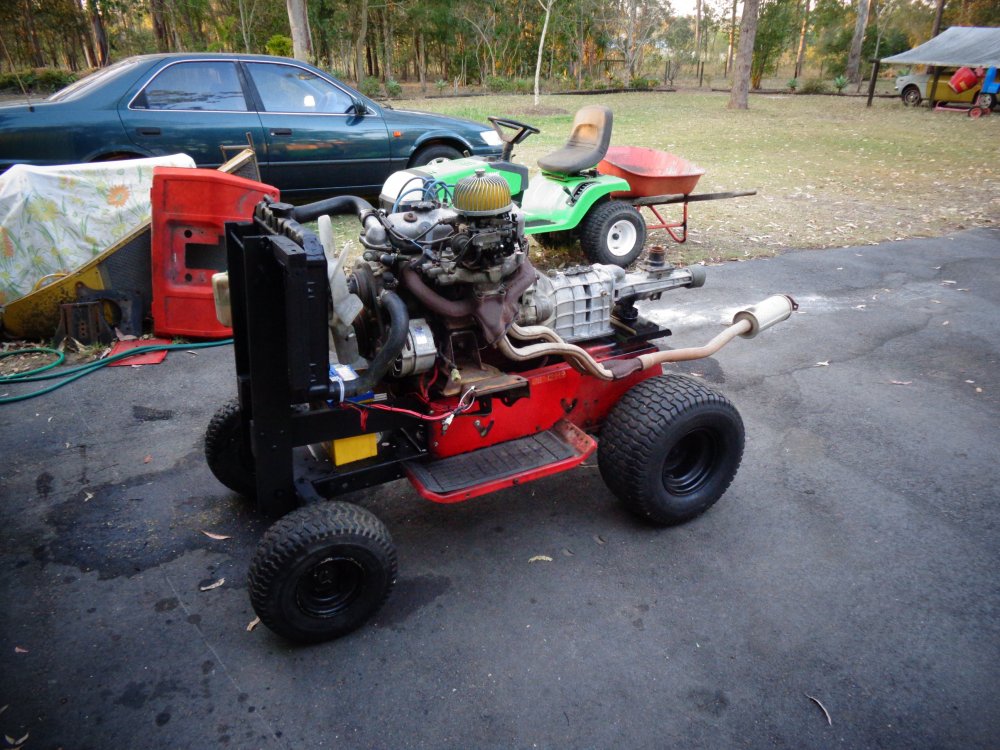
Here's a test bed I knocked up in a day recently, to mount my 5K engine on, to do some COPs mods/experiments. I was going to sit it on the engine test bed / frame I made years ago, but it's got a 4K EFI engine conversion on it at present, & I didn't want to really undo all the plumbing etc. I recently purchased an olde ride-on lawnmower, which I only wanted for the good Briggs & Stratton engine therein. I was intending to dump the mower frame, but thought, maybe I could attach the 5K to it. It would also allow me, to wheel the whole thing around, as I only have 2 car bays in my shed, & our 2 cars should be parked there each night. Anyway, it fitted perfectly, and is so easy to work on, as everything is accessible & it is all at working height. Thought I'd throw it up, as someone else on here might want to build a simple test frame. Here is a few more shots of it, if anyone's interested. https://1drv.ms/f/s!AhTw-QJW1b_6iCOx7jZvpWJvbGuU My wife came home from shopping & thought I had gone stark raving mad. She really thought I was fitting a Rolla motor to a lawnmower, as her first question was . . . "Where are you going to sit ?" Cheers Banjo
-
Wow that's a good site Pete ! Will book mark that. Never ceases to amaze me why manufacturers change the dimensions of automotive glass by just a mm or so, between models of the same series . The olde FJ Landcruiser with the simple flat windscreen glass, was a classic case. I've seen them fall out, because a slightly smaller windscreen was fitted, because the right one wasn't quickly available. Cheers Banjo
-
Hi Jake, As the alternator you changed the "brushes" on, has no internal regulator, whatever is causing the alternator to not charge the battery, could be the alternator, the external regulator, a fuse, or a fan belt, or maybe even wiring coming loose. Like last time, first you've go to check everything visually, & then work your way through each item/component that is part of the "charging circuit". If nothing is visually obvious, then, I'd take the alternator off again, & make sure the brushes aren't the culprit again. Cheers Banjo
-
Hi Madelaine, From your posts regarding your car back in July, in the Electrical Section, you thought you had a starter issue. I gather the new starter you purchased removed that issue, & the KE30 now starts OK, but won't start or run, unless you manually fill the carby bowl with fuel. You said previously, that the fuel pump was working, as it was delivering fuel to the carby inlet. (presumably when you disconnected the inlet pipe) If that is still the case, then the cause could well be, that the fuel can't enter the carby, because the very very fine fuel filter in the inlet to the carby is blocked. This filter is not visible, & many don't even know that it is there. You have to take the top/lid off the carby. Remove the float, & needle carefully, making sure not to lose the tiny spring. Then take a spanner, & remove the brass seat assembly. Once this is out, you can then see the filter, which looks like a very small sewing thimble in shape, attached to the brass seat assembly. Clean this thoroughly with carby & throttle cleaner, until it is perfectly clean, & offers no resistance when you blow through it. Cheers Banjo
-
No, I didn't enter. I'm just an avid spectator ! It's just a great atmosphere, & so well run. Everyone mingles, & you can walk through all the pits & talk to everyone about their pride & joys. Just have a look at the comments on their Facebook page. Everyone says I'm coming back next year. http://www.leyburnmotorsprints.com.au/ https://www.facebook.com/leyburnsprints/ The only things that "bang your doors" are the hay bales, if you drift too wide, or get up on two wheels. This year funds were being raised for the local school. $ 5.00 per ticket. Two draws with the winners getting a quick lap as a passenger of the circuit. The drivers really turn it on, and to see the faces of the winners, when they alight at the finish line is a sight to behold. A mixture of fear & joy that they are still alive ! This video was taken a few years ago. Think Mike was frightening a quick lap winner. Lots of competitors had their Go Pros on. Recommend the weekend to anyone ! Cheers Banjo
-
The "block drain" LittleRedSpirit is referring to above, is a long hexagon tube type fitting, on K series motors, screwed directly into the block, just below the water pump, at the very front of the engine. It has a bolt head at the end, which acts like a tap. My experience is that on many K series engines, you undo the bolt head, and little or no coolant comes out. If that is the case, it is usually easier to unscrew the whole long tubular fitting out of the block. This is almost the lowest point inside the block water jackets, so lots of scale & crud build up, down behind there. By unscrewing the whole assembly, you provide a bigger hole & opening, for the scale & rubbish to get flushed out. Cheers Banjo
-
-
Did my annual pilgrimage to Leyburn at the weekend in my KE30. What a great weekend as always ! Beautiful weather on Sunday, & this event just gets better & better, & never disappoints. The track record was broken for the first time in quite a few years, & there was 209 entries, each getting in between 6-8 runs, over the 2 days. Shannons Show & Shine saw some beautiful exhibits. The racing got very fierce on Sunday afternoon, as the opportunities to lower one's times reduced. A few KE20 Rollas there. https://1drv.ms/f/s!AhTw-QJW1b_6h3-6fgN1V6Z6Yr86 A few pics here, if you'd like to take a look. Cheers Banjo
-
Hi Luke, Welcome aboard ! Good question. Really depends on the state of the inside of the engine. When these engines get old, they can have a lot of buildup in the water jackets. which really needs to be removed, for best thermal efficiency in removing heat. However, because the K series engines have a cast iron block & an aluminium head, they can suffer from electrolysis between dissimilar metals, so coolant leaks are not uncommon, to both the inside & outside of the engine. As well as that, as the aluminium gets old, it changes its composition, & breaks down, & corrodes more easily. A good automotive coolant, will help prevent this, but is not much good on an engine that already has got lots of crud & corrosion inside the water jackets. You could put a good cooling system flushing additive to the water, run it as per the instructions, then remove top & bottom hoses & thermostat, and wash all the loosened crud out of the engine. However, I've seen the results of this previously, with Welsh plugs all of a sudden becoming very thin & leaking, as all the crud on the back of them is really sealing as well. I recently stripped a 5K engine, I acquired, and in the strip down process removed all the Welsh plugs. On two of them, a light tap on the centre with a screwdriver, resulted in the screwdriver going right through. That's how thin they were. When old engines are reconditioned professionally, they usually have all Welsh plugs removed, & the whole block acid washed, then new "brass" Welsh plugs fitted, instead of the original pressed steel ones. The K series engines also have poor coolant circulation, at the rear of engine around no: 4 cylinder. This is primarily about the design of the engine, as coolant enters & leaves from the front of the engine. With less flow at the rear, crud builds up, and the results are not good in the long run. If a piston or rings are going to give you issues, it will quite often be number 4 cylinder. I've had a 3K & a 5K over the years, both have issues with no: 4 piston & rings. So it's up to you, & sometimes it is better to "let sleeping dogs lie", unless you want to take the risk of having to take the engine out and change welsh plugs, or maybe a head gasket. Others on here may have other suggestions, but mine would be to . . . . Remove top & bottom radiator hoses & flush the engine out with a hose, without adding a flushing agent before hand. Replace the thermostat & radiator cap. Refit hoses, if they are in good condition. Add a good automotive coolant. These actions will probably help, but are unlikely to result in any unwanted immediate leaks ! Cheers Banjo
-
One of the other reasons, I went away from using a modified distributor optical sensor, is the issue of oil fumes coming up the distributor shaft, which can put a film over the optical sensor, & eventually impede its performance, which could lead to miss firing. However, if anyone is considering having a go at modifying a K series Bosch dizzy, there are a number of Hall Effect modules for various dizzies, that could be used, in lieu of an optical sensors. Tridon supply a complete range which can be viewed at the following link. http://www.tridon.com.au/products/Tridon/35/482/ignition/2009/crank-and-cam-angle-sensors#1 Cheers Banjo
-
Thanks for the pics of your LS1 coils proposed mounting. Glad to see I'm not the only one you puts old mats on the garage floor to work on. Makes it much more comfortable, when you are down on your knees. (Also stops nuts & washers etc. rolling too far, when you drop them) I'm actually going to use my above CAS multi-tooth triggering system to test my E6K on the bench, this week, before installing in the car, as the E6K supports multi-tooth wheels. Mine happens to be 24 teeth, with 1 synchronising tooth. After reading your 5KTE KE55 build, I remember how hard it was to get the 4K Bosch dizzy shaft to join/line up to the adaptor for the CAS wheel, and have them exactly concentric. However, I will be using the Hall Effect sensors for crankshaft sensing when I put it in the KE30. The first time I ever used crankshaft triggering, I was amazed how steady the strobe light was on the timing markings. It didn't take me long to work out that there is a lot of "slop" between crankshaft & dizzy trigger point. Two (2) sprockets & chain at the front of the engine, & then the camshaft to dizzy shaft gearing. With crankshaft triggering all that is eliminated. Even if you do sequential direct firing of the spark plugs, & need a sych or a homing signal, which must be taken from the camshaft drive somewhere; there is no issue, as the synch or home pulse is not used to trigger. It just tells the ECU that the next trigger pulse must be directed to no: 1 cylinder, and can accommodate any slop without effecting the trigger angle at all. I have built a system that requires no home or synch pulse & is rock steady. It uses two rare earth magnets in the flywheel, the same as I described earlier in this thread, except one has the North pole facing the Hall Effect Sensor, & the other has the South pole facing the sensor. The Hall Effect sensor I use, has the ability to sense north & south poles & tell the difference. I get two independent triggers from the one sensor, which fire two GMH Commodore ignition coils, set up in a waste spark configuration. However, as good as this is, none of the commercial programmable ECUs accommodate this type of triggering set up, so hence, I move on to direct fire sequential using the COPs. I'll keep you posted, once my COPs arrive, & I fit them to the 5K with suitable supporting bracket. Cheers Banjo
-
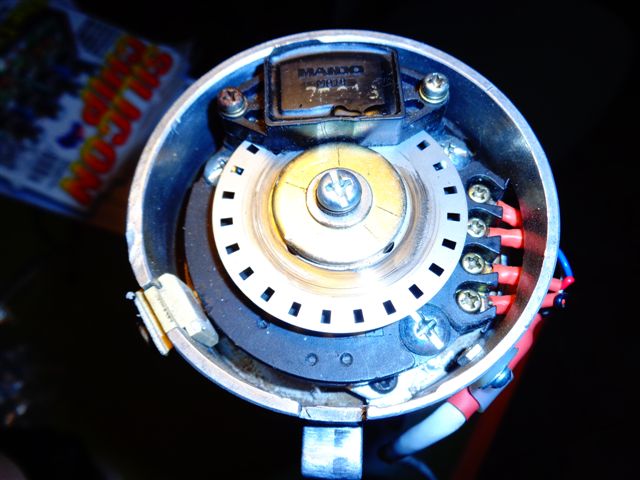
Love the toast rack way of mounting the LS1s. I'd love to see a pic of whats under that spun aluminium pot lid on the dizzy ! I did something similar a couple of years ago. I think I used a coffee jar lid for the CAS cover. Is that the large Bosch dizzy case you are using, or maybe even the dizzy from a 7K, which is really big. I remember I had trouble trying to cram everything into the Bosch one. Cheers Banjo
-
-
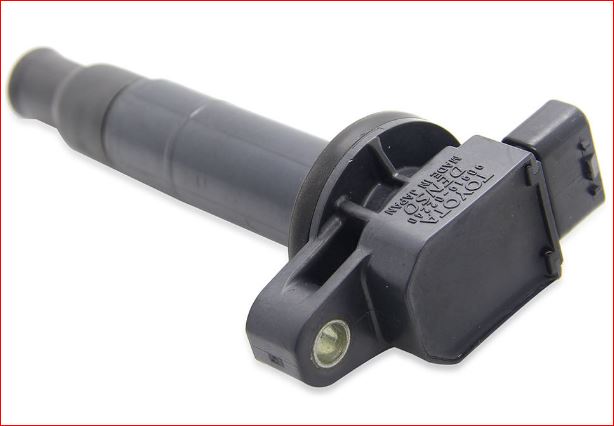
Have done a little more research & have come up with the Toyota CoP P/N 90919-02240, which was fitted to the Toyota 1NZFE & 2NZFE engines on the Echo & Yaris cars. I chose these CoPs, as they have built in ignitors, which are both dumb & smart at the same time. The dwell will continue, just as long as the trigger signal is present from the ECU, but will also produce a minimum dwell, irrespective of how short the trigger signal is. These CoPs have a single bolt hole which normally bolts up flush with the Echo / Yaris camshaft cover. My daughter has an 2004 Echo with a 1NZFE engine, so I "borrowed" a CoP from her car this morning, and set it up on a 4K head on the bench. There are several spare 10mm threaded bolt holes on the rocker cover, on the spark plug side, which could anchor a simple, solid, single, mounting plate, to hold all four CoPs. It would require just one bend in the mounting plate. I'll fashion a mounting plate from a piece of then thinner aluminium, & dummy it all up on the bench, to make sure it all works & fits fine. One of the advantages of this arrangement, besides doing away with spark plug leads, distributor cap, and existing coil, is that propped up in the air like that, they will not overheat, as there will plenty of air flow over them. Apparently, from my reading on the net, overheating CoPs, tucked under plastic covers, (which often restricts air flow), can result in damaged or failed CoP coils & ignitors. Although CoPs can be expensive, the 90919-02240 ones are relatively cheap. I've even seen them new on ebay for less than $ 30.00 ea. I'll post a picture here, once I dummy it all up. Cheers Banjo As explained in the section above all of the four will fire for as long as the duration of the activation ofal from the ECU. However they will also fire to minimum dwell time regardless of how short the signal is triggered, this minimum duration is hard wired and can't be altered.
-
-
Hi Jake, Oppphs ! You just broke the golden rule. When pulling something to bits, keep all the little bits together. After putting it back together, if there are any bits left, then make sure they are not essential. The rubber or nylon washer on the alternator battery terminal bolt is crucial. The bolt is at +ve (12V) battery potential. The case of the alternator is at -ve (GND/Chassis) potiental. The little nylon sleeve you can see in the picture above insulates the two from each other. However, if you connected the heavy battery lead, without the rubber washer, the terminal on the lead would short the bolt to the alternator frame; hence the smoking cable. You effectively placed a short across the battery terminals. This connection point is critical. Place the rubber washer first, then a flat washer, no bigger in dia. than the washer; then a nut which should only be tightened just enough to squeeze the rubber down a little. Then place another washer; the battery cable lug, another flat washer, a spring washer; and finally the second nut. Your little mishap should have not damaged anything electrical, other than the smoking cable. If you look carefully at the replacement alternator, you can clearly see the black rubber or nylon washer at its battery post connection. Let us know, when it is all back together & going well. Cheers Banjo


-
-
Hi Jake, I'll need more info, or a sketch as to how you hooked it all up. I didn't realise the replacement RE55 regulator you have purchased was not made by the Chinese company that produces the alternator. The RE55 is a solid state Bosch regulator, designed for replacing faulty mechanic relay type external regulators. RE55 Solid State Regulator It should work well, with your original Bosch alternator, to which I gather you have fitted new bearings & brushes. There is probably a sketch on the internet showing how the RE55 is wired up. I gather it has an aluminium case, which is earthed & into which the solid state regulator is "potted". I believe as well as the case earth /ground/chassis connection, it just has 2 off spade terminals. Cheers Banjo


-
Hi Marius, Spot on ! When the ignition barrel switch is in the start position, the resistor is effectively shorted out, & power is temporarily connected to the +ve terminal of the coil, whilst the ignition key is in the "START" position.. A quick test would be to short the resistor out, which is adjacent to the coil, & see if the engine runs. If it does, then the resistor has gone open circuit & should be replaced. If it still doesn't start, then go looking for why power isn't getting to the end of the resistor that is NOT connected to the coil. Could be a fuse or wiring or ignition barrel issue. Let us know what you find. P.S. There is no danger in shorting the resistor out for short periods. Coil may get a little bit warmer, if run for long periods, but doubt that would be an issue in Norway, despite it currently being Summer there. Cheers Banjo


