

Banjo
Regular Member
-
Joined
-
Last visited
Everything posted by Banjo
-
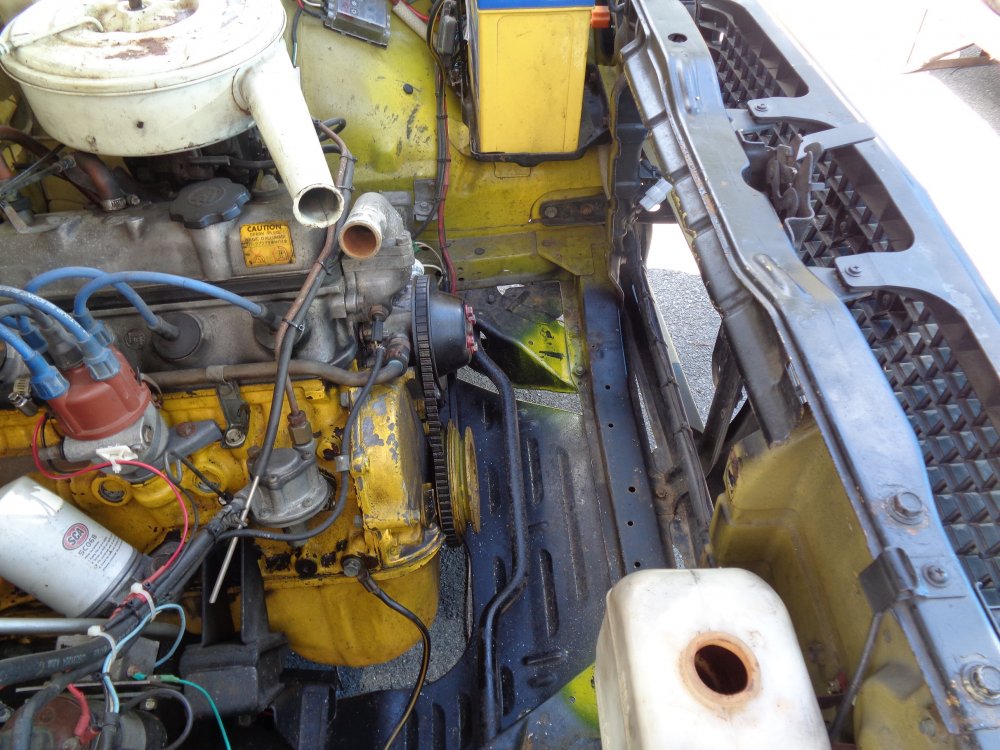
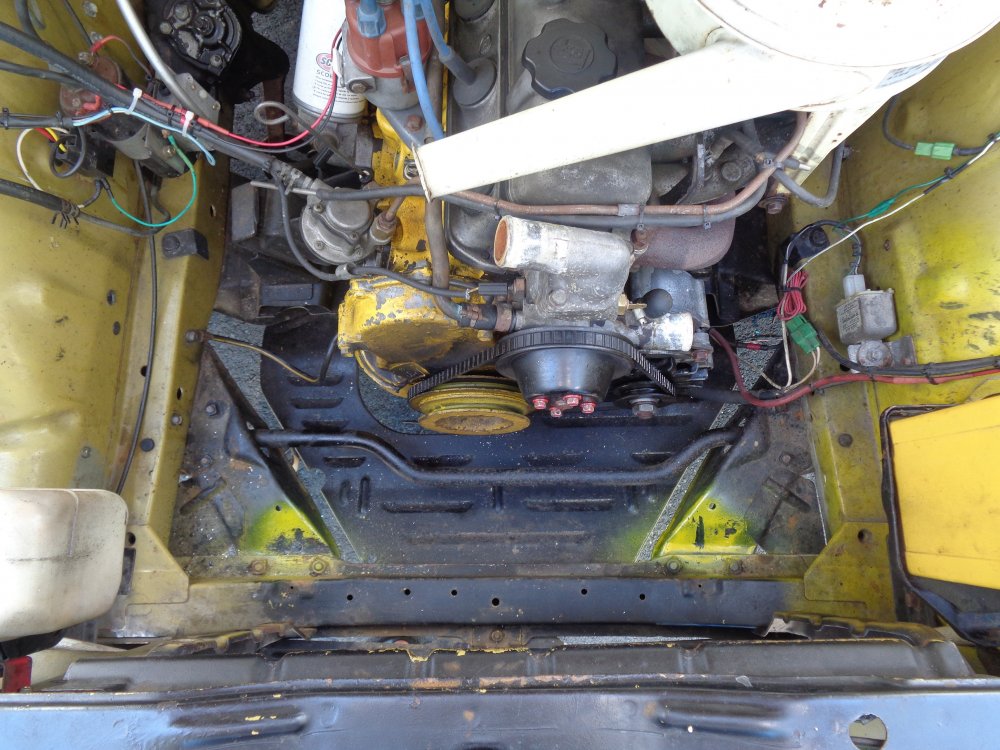
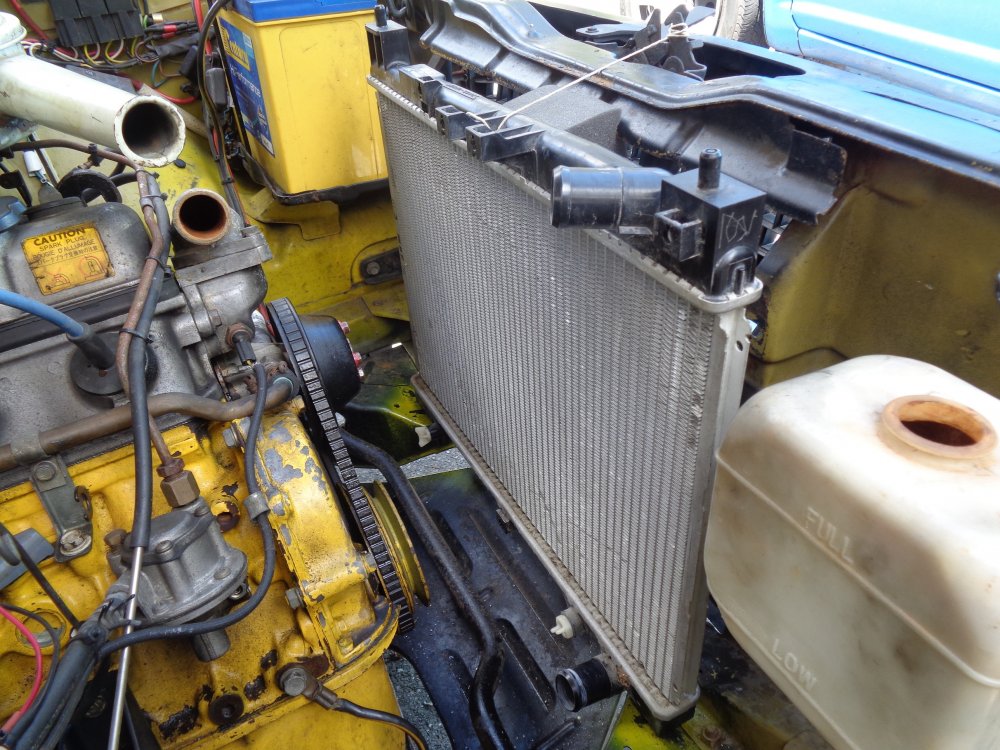
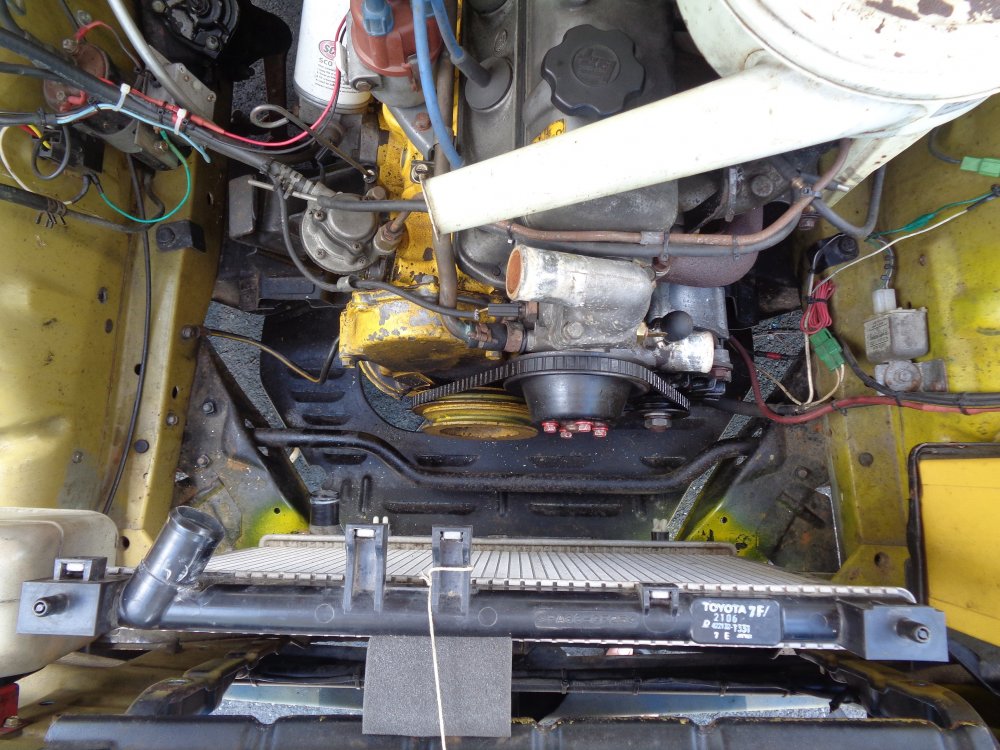
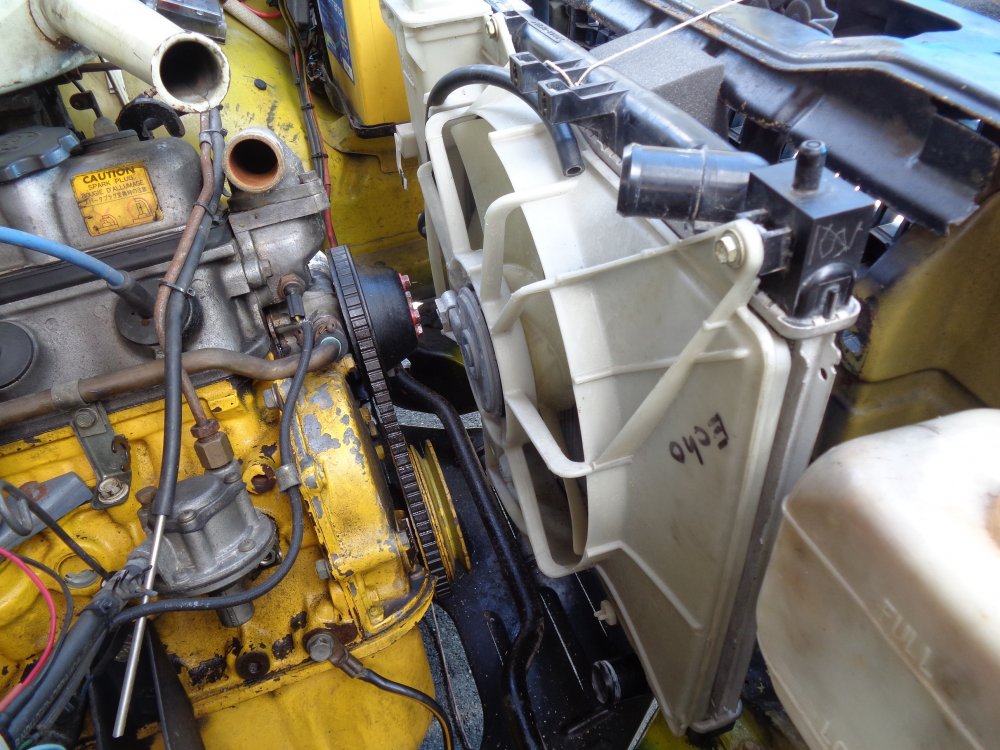
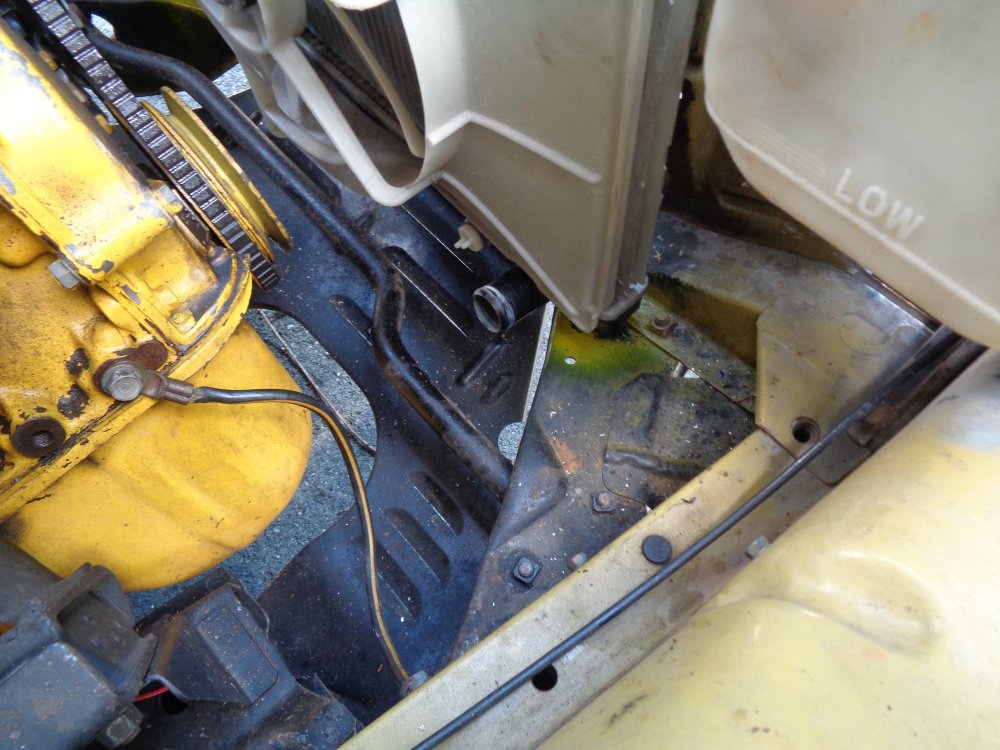
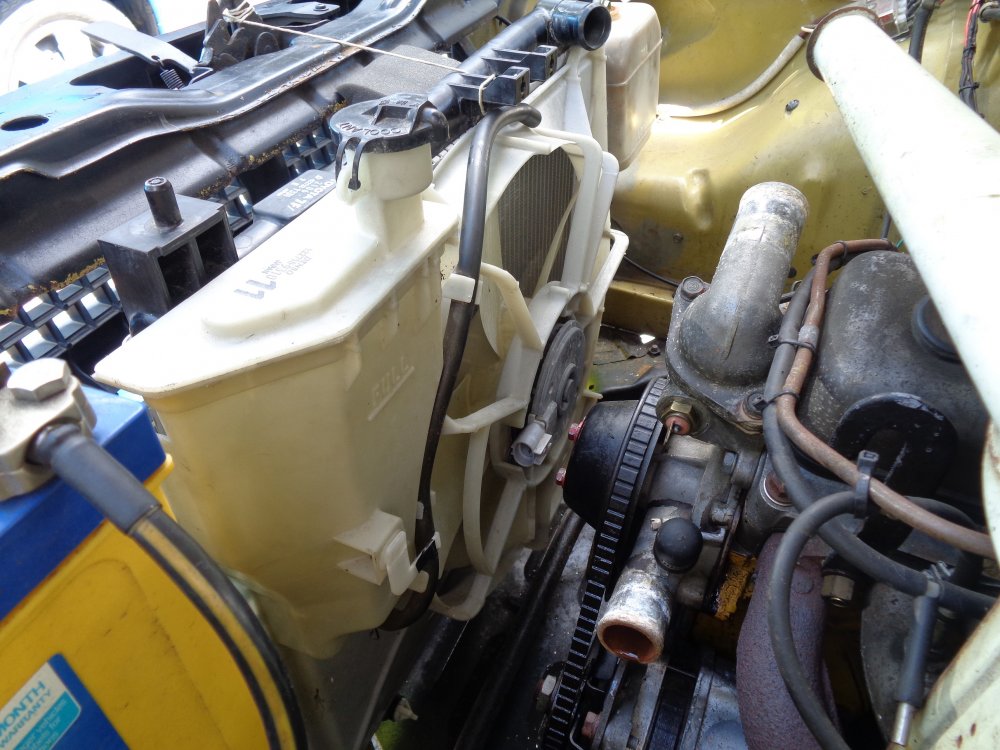
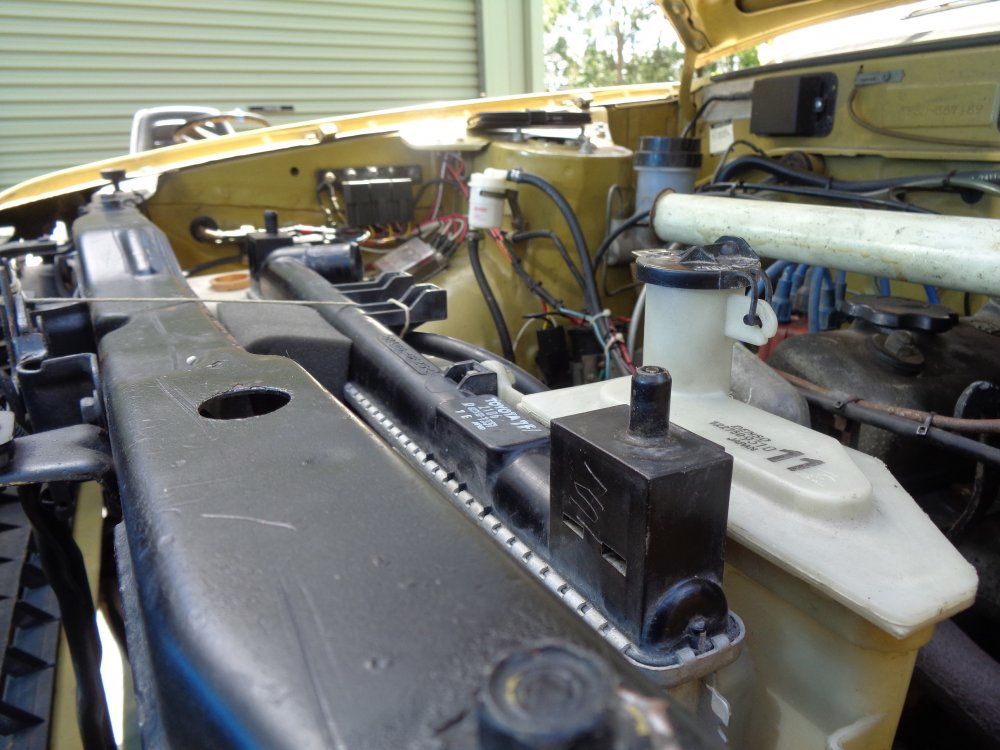
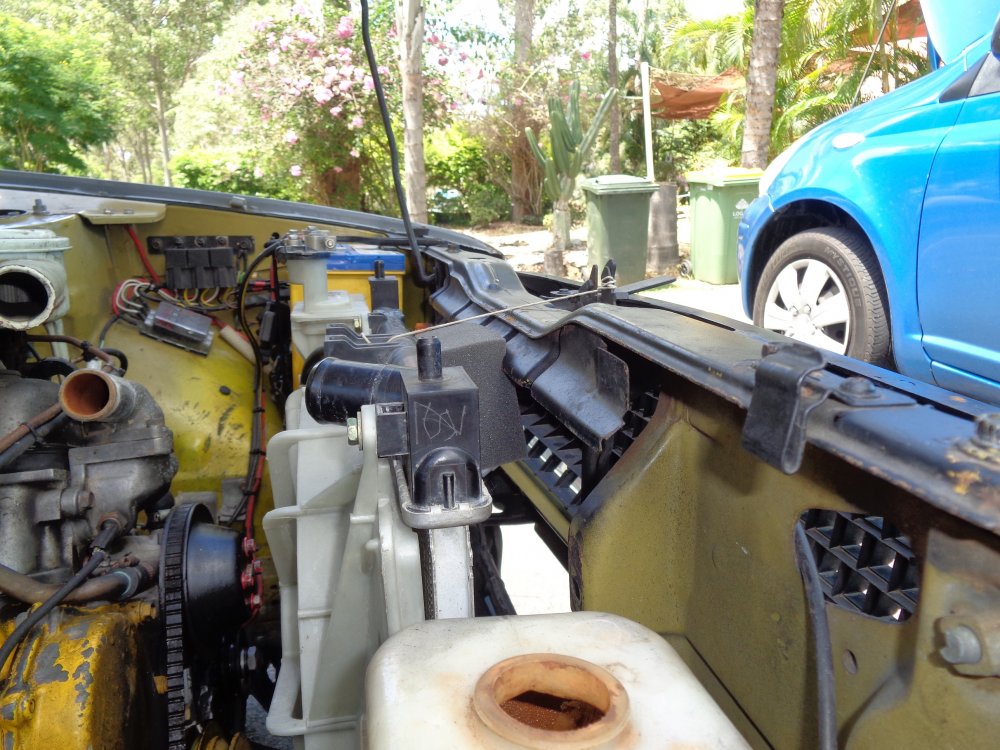
Well, I popped my radiator out at the weekend, between rain showers, & did a trial fit with the Echo radiator & thermofan. Wow, is the Echo aluminium radiator light without fan attached ! This might well be the easiest mod I've ever done to my Rolla, as can been seen from the following pics. It's almost like the Echo radiator was made for it. Plenty of room. The original radiator, mounts on the sides. The Echo radiator mounts top & bottom, with simple vibration isolation mounts/bushings. Will order some bushings today, & then make up a couple of simple brackets to hold them. There is even 4 off existing bolts at the lower mounting points, to secure the brackets. Height wise, you can see it is perfect, & there is ample clearance under the bonnet. There is plenty of room, down below, to fit a transfer pipe for radiator lower outlet, to Water pump inlet, which is on the opposite side. Cheers Banjo
-
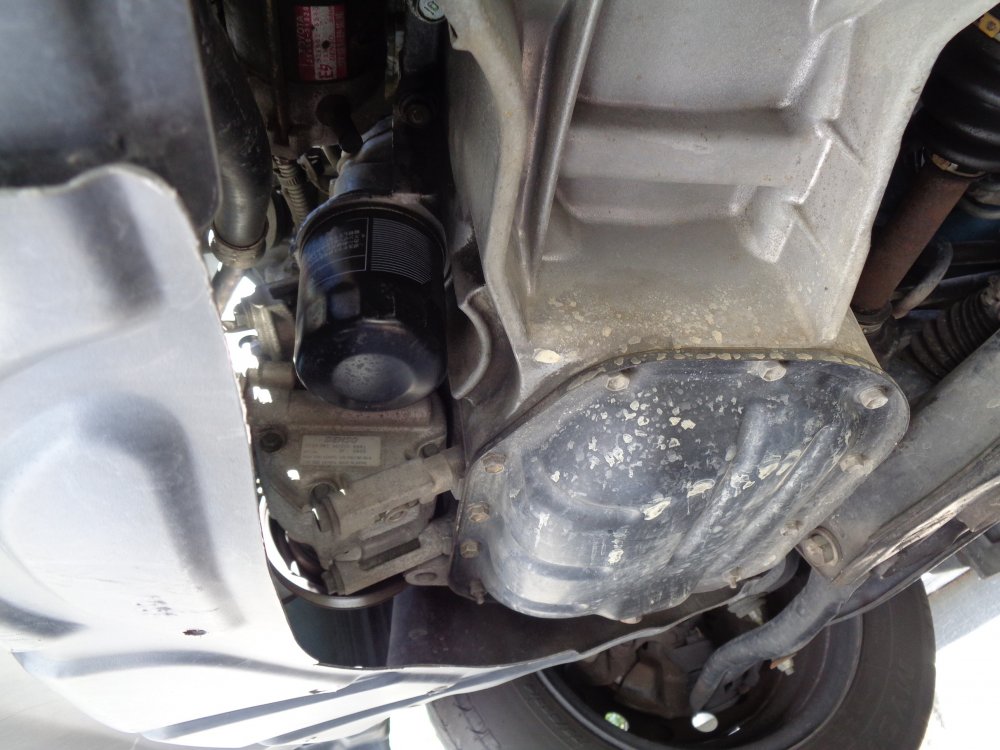
Hi Jeremy, I looked into this by emailing Ryco Customer Support over the weekend. They were very quick in getting back to me this morning. You are quite right that the good olde Ryco Z68, does not have an anti-syphoning valve, fitted as standard.. I also suspect, like you, that lots of cheap oil filters have anti-drain valves that eventually leak, as it is only a large flap, which could distort over time, and the material the flap valve is made of, could vary from one manufacturer to another. --------------------------------------------------------------------------------------------------------------------------------------------------------------------------------------------------------------------------------------------------------------------- We have a number of members who have suffered from oil drain back, & syphoning, after the engine has been shut down, resulting in rattling startups. Most of the 3K, 4K, & 5k engines our cars are fitted with, use the Z68 oil filter. My question is this. Does the Z68 have an anti syphoning valve fitted, as standard ? If not, what other Ryco oil filter, has an anti-syphoning valve, that would be suitable for the 3K - 5K engines, as a replacement for the Z68 ? I can find no where on the Ryco site, where it lists the valves that are fitted to each model filter. Is this info readily available ? Many thanks in advance. ------------------------------------------------------------------------------------------------------------------------------------------------------------------------------------------------------------- Thank you for your enquiry. The Z68 Spin-on Oil Filter is fitted with an Anti-Drain back valve but NOT an Anti-Syphon valve. Having compared the Z68 with other Spin-on Oil filters in our catalogue we can confirm that the Z423 Oil Filter has both an Anti-Drain back valve and an Anti-syphon valve. The Z423 has very similar dimensions to the Z68 as well, identical filter media and thread. Having not tested the Z423 for use on Toyota 3-5K engines we cannot recommend the fitment, thus any customer fitting this filter is at their own risk and will be not covered under the Ryco warranty. Thank You Kind Regards -------------------------------------------------------------------------------------------------------------------------------------------------------------------- Ryco, have suggested the Z423, which is very similar to the Z421 you have found. I'll have a look for a Z423 this afternoon, at SCA, when I'm in town. I had a new Ryco Z418 oil filter on the shelf in the garage, for my daughter's 2004 Echo. I had a look down the outlet hole in the middle, & it doesn't have an anti-syphoning valve, as you can see the inside of the filter element clearly. However, on the 2004 Echo, the filter is mounted very very low on the motor, such that you have to lie under the car to fit it. The outlet for the filter points upwards, (not inverted), so probably doesn't really need an anti-syphoning valve. Ryco didn't answer my query regarding a listing of their oil filters, with which valves are fitted, so will follow that up with them. I couldn't find anywhere on the net, where manufacturers list what valves were fitted to which filters. As they all use a universal identification system, it is possible, I suppose, that one manufacturer could include a particular valve in a particular model, and another manufacturer may not. Needs a bit more research. Jeremy; where did you find the info about the Z421, that it has an anti-syphoning valve fitted ? I'd be interested to know. Will advise, if I hear any more from Ryco Customer Service. If I can get hold of a Z423 today, I'll fit it & try it out, as my Rolla is about ready for an oil change. Cheers Banjo
-
Hand brake operates on the rear wheels. Are you just missing cable or is hand brake handle also missing ? Cheers Banjo
-
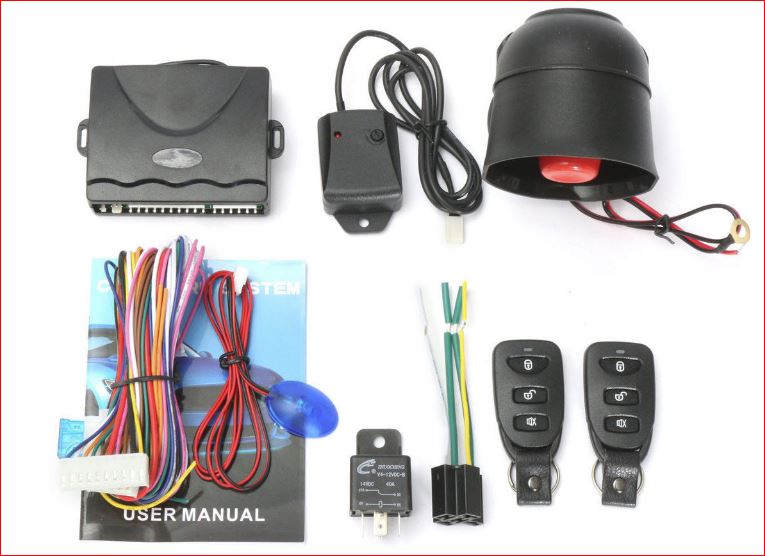
Hi Craig, Welcome aboard ! I've seen these Chinese kits, on ebay for under $ 50.00. I presume it comes with a wiring diagram, that in in the manual. Does it look a bit like this ? Bit hard to comment or assist without the wiring/hook up diagram. If you can scan it & post it, or display a link to where it can be viewed on-line, that would be very helpful. Don't want to give you advice, sight unseen, & accidentally blow your Christmas present up. I would be inclined to hook it up on a table or bench first, with a 12Vdc supply or battery, & test it all, before installing it. Much easier, than installing it, & then trying to trouble shoot, in the car. Cheers Banjo
-
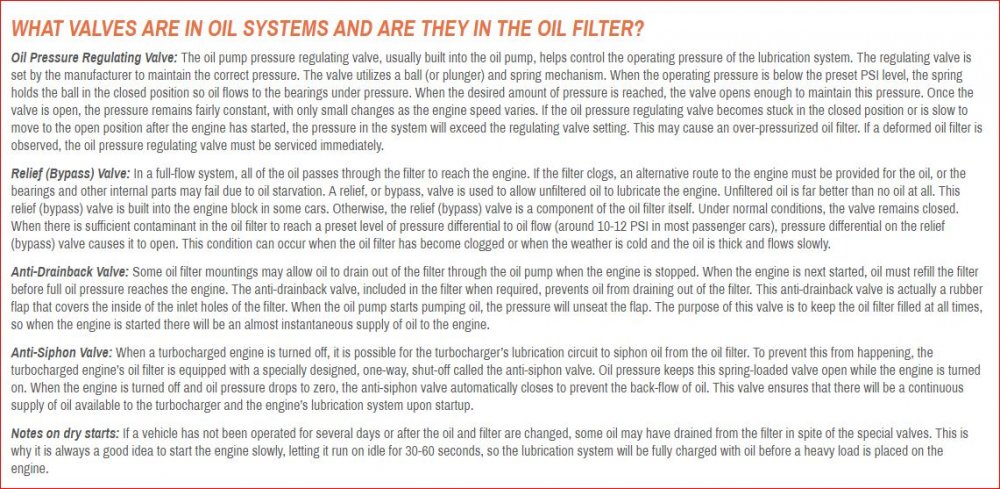
The way this bulletin reads, you'd believe anti-syhponing valves are pretty common. http://www.rycofilters.com.au/library/news/1181284334_document_ryco_tech_bulletin_-_may_mail_out1.pdf There was a lot of discussion along these lines, back a few years ago, on Rollaclub. https://www.rollaclub.com/board/topic/71334-oil-filter/ I've always used the Ryco Z68, & never had a cold start up rattle yet. I do notice there is a squatter version Ryco, with P/N Z158, for presumably low delay start ups. Ryco recommend them for the 4K--U & 4K-J engines. I've always presumed, after reading the Ryco website, that the Z68 has anti-drain & anti syphoning valves. I must cut one open, next time I do an oil change. This is from the FRAM website, about the various valves in the lubrication system, & what each one does. Cheers Banjo
-
Hi Graeme, Must have a look next time I'm in SCA. Are they good quality ? There is a guy down in Sydney on ebay, at Bonnyrigg, who makes them for KE20-25 & KE30-55. They all sell for $ 39.99 = $ 15 freight, so much the same. Good fit. Good guy ! Didn't have the colour I wanted in his his stock colours. Contacted him, & told him the exact colour I'd like, & he made one up in 2-3 days, for same price. Have had it about 3 years now, & it still looks good, & has endured the sun here in Qld well. Cheers Banjo

-
Very, very clever ! I've just read the full article Dave, & it's a good read. What your second pic of the shroud, (as the Americans call them), depicts, is the excellent fan impellor design, with a continuous edge, eliminating the fan blade tips, which create cavitation of the air at the tips/ends. The way the continuous fan impellor edge & shroud overlap, is also very clever, & further enhances the lack of air cavitation. The actual shape of the seven blades is very efficient, almost "scooping" the air through. A bit frightening how much current the fan pulls, looking at the ratings of the relays & electrical components. Cheers Banjo
-
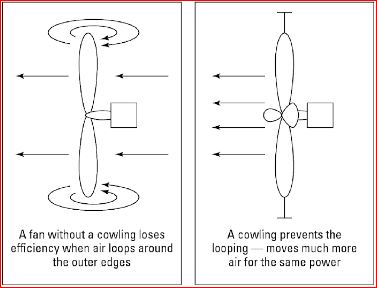
Hi Keith, I tend to agree with you about the need for a cowling. I did a bit of research, & basically the cowling has two functions. 1. To direct air flow 2. To prevent cavitating & looping of the air at the tips of the blades. " The most efficient movement of air occurs when a fan has a cowling. A cowling prevents the looping and forces the air forward, moving much more air for the same power." However, although some could argue that with an enclosed space under the bonnet, all air will pass over the engine, & through the engine bay & exit down under the rear of the car, whilst ever it is moving forward, when the car is stationary at lights, in traffic, there is no forward movement, so maybe the air needs direction more onto the engine itself. Debatable ? The argument against a cowling, is as you say . 90% of the time the fan is not required at all. The best way to decide this is for me to try it out, once I have fitted the thermo electic fan & radiator. I can then take measurements & see what effect removing the cowling has. I will definitely make the weigh & volume checks you suggested when swapping over the radiators. Cheers Banjo
-
-
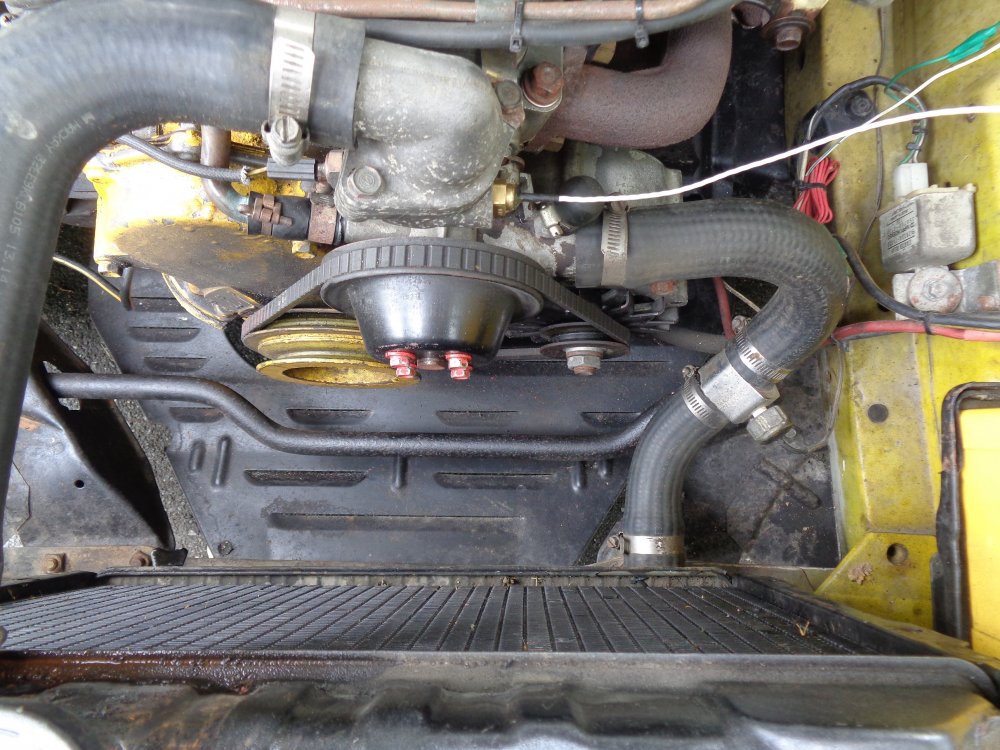
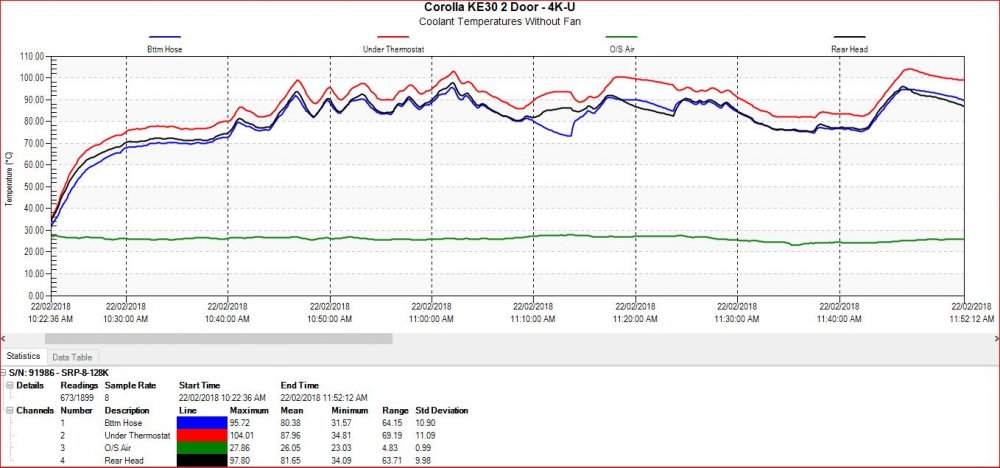
Interesting thoughts Jeremy. It occurred to me that the real issue is that the cooled coolant from the lower radiator hose enters the water pump, & therefore the block, at the front of the engine. The heated coolant, exits the top of the head at the front of the engine. Best results must be when the coolant enters the engine at one end, & exits at the other. That way you get consistent & uniform flow through the whole engine, however, it does create a temperature gradient along the length of the head, with the rear still being hotter than the front. This assumes that all the water jacket holes in the head gasket between block & head are opened. An even better way, would for coolant to enter the block at the centre of the engine, & exit from both ends of the head. Bit impractical in our case. However, the first scenario, is possible. Leave the water pump where it is, but remove the thermostat enclosure from the front of the head, & replace with a blanking piece. Weld a larger spout to the plate on the back of the head, & direct coolant back to the top of the radiator, via a thermostat. Only trouble is there is not a lot of room between the back of the head & the fire wall. There are some car engines that are designed that way. Anyway, to things current. I've been driving around today, without a fan at all, & with no fan cowling. The results are quite different, & I did get the coolant temperature up over the 90 deg C mark. The average ambient temperature was around 26 deg C. I left home at 10:20am, from a cold engine start, and you can see it took about 10 minutes for coolant to reach 70-80 deg C. The next 10 minutes to 10:40am, was on open road @ 80 klm/hr without traffic, & you can see how stable the temps were. From thereon in, you can count every set of traffic lights I stopped at, once I hit town, with no fan to draw air through the radiator to cool it. Just before 11:10am, I stopped at the P.O. for 4-5 mins, and you can see head coolants, front & rear rise sharply, with the heat sink effect, but the lower hose coolant temperature actually dropping. The interesting part is that it there is only about 1.3 deg C, between coolant temperature entering the engine, & the coolant exiting the rear of the head. In fact, just looking at the graph, in places it looks like they are on top of each other. This is a bit of a puzzle. The other one, is why does the temperature at the bottom of the radiator drop so suddenly, as soon as the engine stops. Hot water rising ?? You can really see why you need a thermo electric fan in city stop start driving, only switched on, when needed. The sensors used under the thermostat & in the lower radiator hose are identical, and were calibrated together, in the same data logger, in boiling water. Graphs of the temperatures of both probes, when the car has been stationary over night, where engine & coolant are the same as ambient temperature, also show both temp sensors reading exactly the same. I might see if I can't "replumb" the return coolant line to the underside of the thermostat, rather than back to the inlet of the water pump, which is where it currently is. That may display a different coolant operating characteristic. Might pop the radiator out at the weekend, & see how easy or difficult, it is going to be to fit the Echo radiator with integral thermo electric fan. Cheers Banjo


-
No ! No ! No ! I've been trying to "wean" myself of that stuff for years, & it's got me no where. Does it make a good coolant ? ha ha ! Cheers Banjo
-
Hi Keith, Just about to pull the fan & radiator cowling off, & take a run into town in about 90 mins. & see what changes that makes. Another cool day today, which is pretty unusual for SE Queensland, at this time of the year. I love data logging, as it shows you dynamically what is happening, especially when you measure & record several variables at once, that each have an effect on each other. Sometimes it throws up things, which are quite the reverse to what you imagine is going on. It's always eye opening. They say, "What Gets Measured, gets Managed", & there's another one that says "Without Data, it is Just a Matter of Opinion". It's a great way of quickly solving issues, instead of the "trial & error" method. I'll throw up the graph without the fan, & cowling, when I get back. We will get this issue sorted, I'm sure, but my idea is to change one thing at a time, so you can quantify the results. Cheers Banjo
-
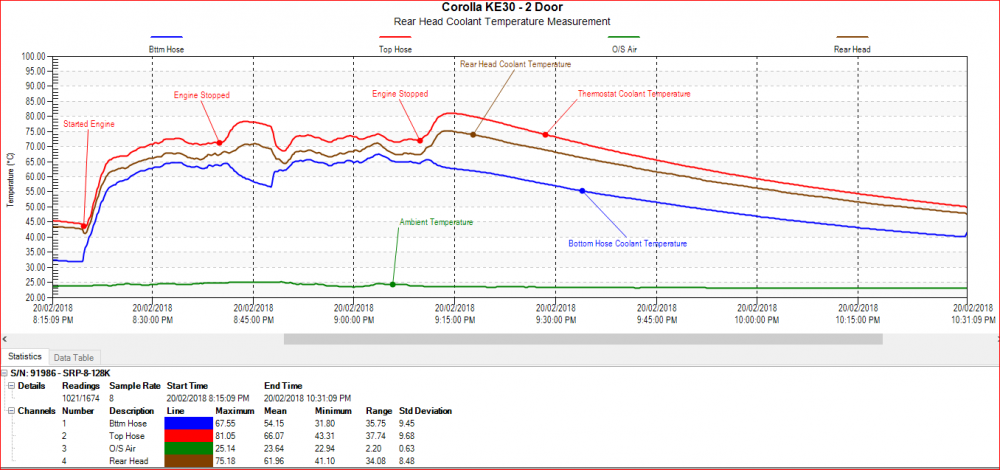
I had a bit of trouble doing this rear head coolant temperature measurement. I was hoping to insert a temperature sensor in the water jacket itself, in the rear of the head, so that the sensor was screwed into the head itself, just like the one fitted below the thermostat. There are no screw plugs at the rear on my 4K-U head, but it does have the small plate on the rear of the head, for the heater inlet connection, into which I could have fitted a ferrule, & screwed the sensor into it. I was reluctant to remove this plate, as the threads in the head are not blind, & the bolts become rusted, & invariable snap off, trying to undo them; especially the lower RHS one. There is also only a couple of inches to work between the head & firewall, so any issue, would have resulted in the head coming off, which I wanted to avoid. I decided to buy an inline hose adaptor to take the sensor (gold bit). I found a suitable bit of hose, with two appropriate bends in it, at SCA, which was designed for a VR Commodore 3.8L V6 Water Valve to Heater Inlet (P/N CH1779). The pictures below, indicate how I mounted it all, with the sensor as close as possible to the point where the coolant exited the rear of the head, on it’s way back to the water pump inlet, as it’s a heater return line. Got any air out of the system, by running it for 10 minutes, with the radiator cap off, & it was ready to go. A week ago here in outer SW Brisbane, it was in the high 30s, but last night, couldn’t have been more different, with air temperature in the low 20s, probably 15 deg C, below what it had been 7 days previously. So my daughter needs picking up at the bus stop about 15 minutes drive away. I drive to the bus stop, wait less than 10 minutes for her to arrive, & straight back home again. The coolant temperature measurements are shown on the graph below. Unfortunately, the night was so cool, the ram effect of the ambient air, wouldn’t allow the thermostat to open. From previous tests, I’ve done, I know this thermostat opens at approximately 88 deg C, as it should. In this case, the temperature never reached that temperature. However, the rear head coolant temperature, was actually cooler than the coolant just under the thermostat, at the front of the engine, by just a few degrees, which is a great result, as I know previously, I had measured head surface temps up to 10 deg C greater at the rear. Some of this could be because the sensor was not in the head proper, & quite likely, the fact the water was moving over the rear sensor, as it doesn’t return to the top of the radiator, on the inlet side of the thermostat. So a few more tests are required. Firstly, I’ll take the plastic fan off, and run without it. If that does not help increase the coolant temperature, then maybe a piece of cardboard over the front of the radiator, will assist. I may also plumb the heater return line into a spare stop plug in the thermostat housing, just below the thermostat, so coolant exiting the head from both ends, goes to the same point. Not all Rollas have the plate on the back of the head with the heater inlet port. If you have a 3K big port head, you are out of luck, & it may take a bit of machining to remove the “bung” & make a suitable plate. If you have the plate without the heater connection, it does provide a situation, where you could fit an outlet facing to the dizzy side of the engine. If you have ever had that plate off, at the back of the head, you can see why this overheating problem occurs so easily, with low flows. The passages in the water jacket are quite small, & with low flow & “gunk” buildup, it’s easy to see that you could have a head with minimal flow at the rear. If this mod works as well, as it appears it will, it might also be a good idea, to either buy a head gasket with no water jacket feeders between block & head "blocked off". Alternatively, as most head gaskets now block the front feeder holes off, to direct all coolant to the rear of the head, maybe these could be drilled out, in the head gasket. So I’ll do some more tests, & see whether I can’t generate some more heat into this coolant, & see what transpires. Cheers Banjo


-
Please post some pictures of the actual damaged area, & I'm sure there are those experienced on this forum, which will offer their thoughts. Cheers Banjo
-
It appears there were quite a few different types of dizzy for the 3Y, with both points & electronic. http://brianlawson59.blogspot.com.au/2012/03/distributors.html The ones for South Africa, were apparently different, & that is where Sipho is located. As Sipho has replaced the condensor, we have to assume it is a points type, which were fitted mainly to the 3Y engines, according to this blog at the above link. Maybe Sipho, your issue is with the rotor or the spring & carbon rubbing point in the top of the dizzy cap. Would need a bit more info, to solve this one. At least if it is points, it is the cheapest & easiest to fix. Cheers Banjo
-
There we go Viterbo ! Now we know what it is all about. From the ToyHead website Jeremy has linked above. They are saying, what we all know, that the back of the head coolant temperature can be up to +10 deg C above coolant at the front of the head. Therefore, cylinder no: 4 detonates because of the higher temperature, so they use the low temperature thermostat, to lower the overall coolant temperature so no: 4 cylinder doesn't detonate. That's why valves, head gaskets & rings & pistons fail on no: 4 cylinder. The constant detonation, from the excessive temperature. However, whilst cylinder no: 4 may not now be detonating, with the low temp thermostat, the other front 3 cylinders are lower than what they should be, for best combustion & best efficiency. The better way to solve the problem is to increase the flow through the back of the head, so that the temperatures of coolant around all four combustion chamber is with 1-2 deg of each other. The experiment I am currently implementing, should prove that theory, by exiting coolant out the back of the head to the radiator or water pump, external to the engine's coolant galleries. Then you can run a standard 82 or 88 deg C thermostat. I should have the experiment finished, with graphs, in the next few days. Cheers Banjo
-
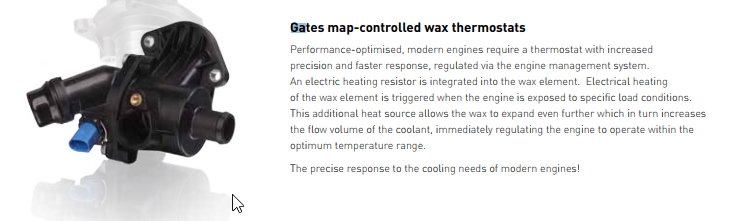
I had a think last night, about what Viterbo is requesting. One of the problems with thermostats is that the solid wax has to be heated, by conduction through the metal structure, before it turns into a liquid & then expands, forcing the valve to open. This does not happen instantly, as anyone who has put a thermostat in a pot of cold water, heated it up on the stove & watched the opening, will know. It is relatively slow. This has a dampening effect, which is good, once the valve is opened. If the valve was very fast in its reaction time, whilst regulating the temperature, then the thermostat valve would be in a constant state of motion, & wear out quickly. What I think Viterbo is wanting, is a quicker opening initially, so there is no lag in opening, & therefore overshoot of coolant operating temperature. He believes that using a thermostat with a lower temperature opening characteristic, will be like a early warning, anticipation system. This is probably the case, but the result is that the operating temperature of the coolant must then be somewhere below that crack opening temperature, which puts it down in the mid 70s deg C mark. Appears some thermostat manufacturers, including Gates, have addressed this need. So specific engine conditions which will create extra heat load on the coolant system, are anticipated, & the heating of the wax in the expansion chamber is accelerated with a inbuilt heating element. Once that high loading condition disappears, the wax goes back providing the "damped" response to controlling coolant temperature. Interesting ! Cheers Banjo
-
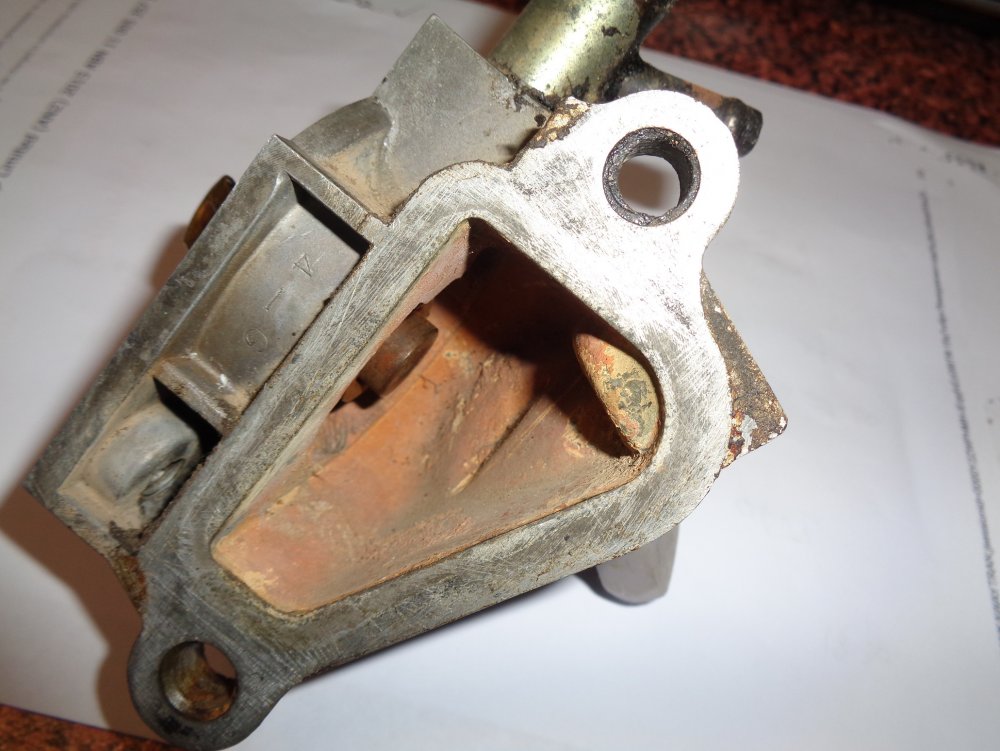
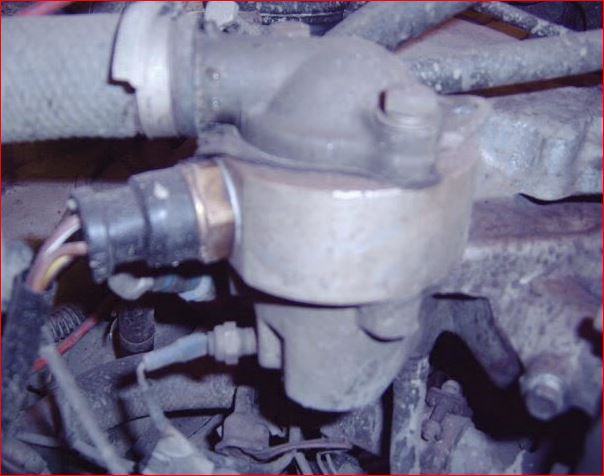
Can I wade in on this one ? The thermostats for the K series engines are all 52mm diameter, across the top, where they fit into the "thermostat housing/water outlet". However, there are several different lengths, or depth, dependent on manufacture. I have one on the desk here, exactly the same as your first pic, with 25mm, below the "mounting" point. I have another that is only 20mm in this dimension. When the thermostat is mounted, there is heaps of room below the thermostat. (see pic below with 25mm thermostat inserted) This allows approx 18mm for the back of the thermostat to move down, when fully opened. That is more than enough, as the thermostat valve movement from fully closed, to fully opened is about 10-12mm at most. Your second pic of the Gates thermostat with the 35mm dimension, had me puzzled. Why would they design a thermostat with a temperature below 80 deg. In this case 78 deg C. The answer was fascinating. I discovered that that thermostat was used on early 90s Daihatsu Applause 1600cc engines. When I Googled Daihatsu thermostats, the often question was, I can't find my thermostat. It appears it is at the back of the engine, not the front, up high, & controls the cooled coolant, rather than hot water to the top of the radiator, as in the K series. "On the Daihatsu Applause 16 valve engine the thermostat is NOT located under the alloy housing that attaches the top radiator hose to the head. It is located at the back of the engine block, at the opposite end of the engine, just above where the alternator is situated. Three 10mm bolts hold the thermostat housing to the block. The bottom radiator hose is attached to the housing. All you need to do is disconnect the water temp sensor wire, undo the three bolts & push it toward the alternator. Remove the thermostat from the block replacing it with a new one. A rubber gasket fits around the outside of the thermostat & I used a little silicone on the gasket to hold the thermostat while you re-install the housing. Don't forget to reconnect the temp sender wire & fill with coolant." Obviously cooled coolant after it passes out of the radiator could well be 10 deg C lower than operating temperature. So if the 35mm thermostat is 10mm longer/deeper, than the 25mm one, then it protrudes further down into the chamber below the thermostat. So instead of 18mm of travel, that only leaves 8mm, with this thermostat. It might be borderline, as I don't know what the travel is the Daihatsu thermostat. Apparently, this is where it is fitted< & you can see the special housing is quite deep. But like Dave & Si, I see little need for lowering the thermostat opening temperature. Engines, are designed to operate generally at temperatures between 80 - 95 deg C. The thermostat is designed to do two things. 1. Get the coolant temperature up to operating temperature, just as quickly as possible, from a cold start, as this is the period where most wear occurs in an engine. 2. To control the coolant temperature in a band of say 4-5 deg C. So a 82 deg C stat, might open @ 82, & close @ 78 deg C. Even if you are in the desert, where the ambient & coolant temperature are 40 deg C, at a cold start, that is only half the temperature that the engine needs to be at. In outback Australia, where it is very hot, I know there are lots of people who remove the thermostat all together. There is no evidence, to my knowledge, that removing the thermostat, will increase coolant flow. The reason they remove them, is purely that water supplies are poor, and thermostats reliability is poor, & they don't want a siezed motor. Many motoring organisations, years ago, recommended replacing your thermostat yearly. However, in these days of modern high tech coolants, & more reliable themostats, there is no need for that. I don't think you are providing additional safety, by lowering the coolant temperature. If you are going to generate more heat, as a result of modified or operating conditions, of the engine, and it overheats, then you simply need a larger or more efficient radiator. The usual first step is to go from a 2 core to 3 core, as that requires no "bigger" radiator mods. Cheers Banjo
-
That is incredible Jeremy ! I figure that guy is standing at the door looking in, because he can't get any further into the building. The sign next to him says NO PARKING, I believe; so I guess, that if you park too long outside, they just dissemble your car, or truck, & take the bits inside. So what happens, if you say you want that gearbox I've arrowed ? I suppose we'll never know, as it is a little bit big & "heavy duty" for a Rolla conversion. (come back in a month ?) Amazing ! I guess you are asking how much extra HP you are going to achieve, with the increased CR, by fitting the correct head. You will have to measure & calculate cylinder & head combustion areas accurately, before & after, to work that out. I think its a case of suck it & see, but it will be an improvement over the very low CR you currently have. Enjoy your trip back to Perth ! Have you got a "shopping list" of things you need to take back ? P.S. For heavens sake, do not cut & weld push rods ! A recipe for a disasaster. Cheers Banjo

-
Hi Bill, Good one ! Doesn't hurt to have a new water pump. The seals go dry, if the engine not been used for years, & could leak like a sieve, once you fill her up at the end, which would be a bit disheartening. Plenty of alternator brackets hanging around here, so no issue, if you need one of those, shipped with the pulley. There is another bracket on the opposite side of the motor, for the A/C compressor, if fitted. Trouble is, very few Rollas here in Aussie, were fitted with A/C, so they are very hard to find & get hold off. Cheers Banjo
-
Hi Michael, Welcome aboad ! Most KE3X grills will fit on a KE5X models. The only one you may have a slight modification to do, is if the KE5X you are fitting the kE3X grill to, previous had square headlights. However, my belief is that the extra brackets etc. for the grill with square headlights, can easily be removed, & the gear & mounting points for round head lights were retained. The harder conversion is the other way around, fitting square head lights & associated grill to a kE30, which, to my knowledge, were never offered with square headlights option. I did this conversion a few years ago, & it was possible, by "finicky" ! Cheers Banjo
-
Wow, that's a bummer ! Did you rebuild the 4K yourself, or did someone do it for you ? What was involved in the rebuild ? Was it bored or honed ? Was there new pistons or rings ? New big end and/or main bearings ? Crankshaft reground ? New crankshaft oils seals back &/or front ? Was the head rebuilt also ? Was the camshaft, & camshaft sprocket removed ? If you tell us what was done to it, it will narrow down where the issue may lie. With all four (4) spark plugs out, with the dizzy out, with the fan belt off, gearbox in neutral, the engine should spin freely on the starter motor, or be relatively easy to turn over using a socket & ratchet on the crankshaft pulley retaining nut. If it won't turn, easily, then don't try to force it, as you run the risk of damaging something. Strange. Normally an engine assembler spins the crankshaft by hand, then adds pistons & conrods, one at a time, spinning it at each addition. Finally camshaft & sprocket & chain. when they are happy, everything is free to spin, then, & only then, does the sump get replaced & sealed. Any chance of you recording the attempt to turn it over, with audio,so we can hear the clunk ? Cheers Banjo
-
Hi Jeremy, Yes, it is cable operated, but is just a 2 port valve (ON/OFF). However, it is not on the engine side of the firewall. It's under the dashboard, close to the heater coil. You could just keep the old one open permanently, & add this suggested one, in the engine bay. Below are pics of the heater coolant return path to the inlet side of the water pump. Cheers Banjo


-
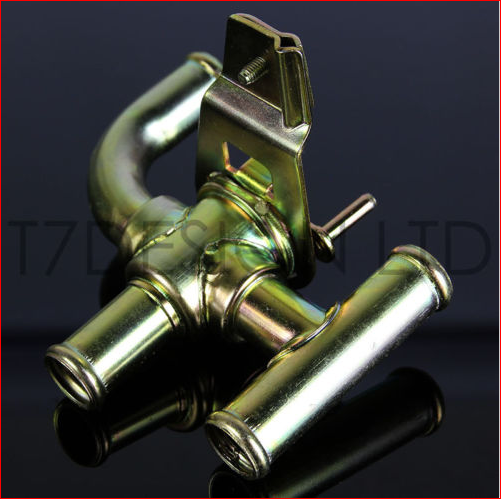
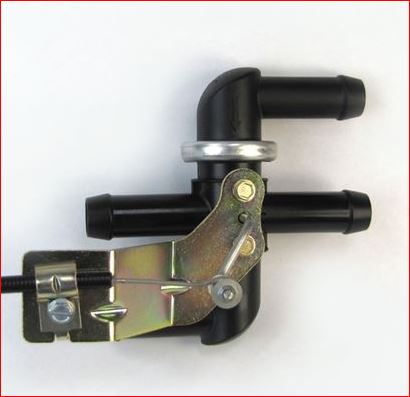
Here is another possible "simple to implement" option, to get more coolant flow through the back of the head's water jacket. https://www.ebay.co.uk/itm/16mm-5-8-Heater-Control-Valve-Pull-to-Bypass-Kit-Car-Classic-Car-Taxi-TX2-/192279138616 It would involve simply replacing the existing mechanical heater water ON/OFF valve, with just two (2) ports, to a four (4) port heater FULL bypass valve. When the heater is "ON", the hot coolant would pass through the heater as normal. When the heater is "OFF", the hot coolant would bypass the cabin heater, & return to the inlet side of the water pump, via the existing return coolant line. Consequently, coolant would flow out the back of the head, at all times the engine was running, whether the heater was ON or OFF. The only issue with our Rollas, is that the area where the existing "ON/OFF" valve is located, is a bit tight, so the new 4 port valve may have to be located adjacent somewhere close, & a few 16mm I.D. hose connections made. The area between the back of the head & the firewall, is also tight, but at least, there is only one hose connection there. Here is a cheaper plastic one, that is cable operated & comes in two (2) models. 25-1018 Pull to Open, & 25-1019 Pull to Close. They work like this . . . Only trouble is I have been unable to find a local source here in Australia or S.E. Asia on-line. From what I can see, they are only available on line in the UK & USA. Give us a yell, if you know where I can source one locally. P.S. In researching this, I found out why they are so available in the northern "colder" hemisphere. Apparently, in many older European cars, the coolant flows through the cabin heater coil all the time. The heat is controlled not by regulating the water flow at all, but by the air flap, in the heater box. When the heater box air flap sponge rubber seals deteriorate, hot air leaks into the cabin, when the flap is closed, & in July (their only warm month) it gets too hot inside the car, so these valves have become popular as a mod on older cars, to stop the water flow altogether, when heating is not required. Modern European cars apparently, sometimes have the heater on constantly, & it is turned off, when the A/C unit is switched on. A bit different to our conditions, here in Australia. Cheers Banjo


-
Love it ! So this little air bubble bleeder valve has to be pointing high, (as you would expect), therefore is should never be described as a "Jiggalo".


